
There’s a moment right before you taste real Peruvian ceviche. Fresh fish. Lime. Red onion. Salt. Cilantro. You smell it and you get citrus and ocean.
Then you get the heat — clean, fast, floral.
That heat is almost always from ají limo.
People online love to say “ají amarillo” because it’s the famous one, but classic Peruvian ceviche is built on ají limo. At Izakaya Nanika, we treat ají limo like a core ingredient, not an optional chili.
What Is Ají Limo?
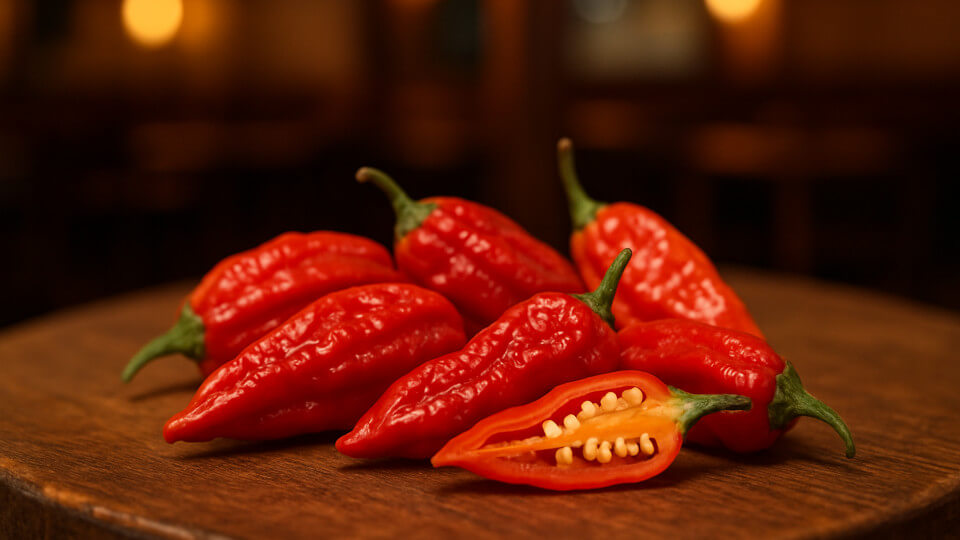
Ají limo is a small Peruvian chili pepper. You’ll see it in red, yellow, orange — color doesn’t matter as much as the aroma.
Key things about it:
- Smell: very bright, slightly citrus, a little floral
- Flavor: clean heat, not smoky, not roasted
- Burn: fast but not heavy
It doesn’t just make ceviche “spicy.” It gives ceviche its identity. Without ají limo, ceviche loses that sharp perfume in the leche de tigre.
If you remove the ají limo and keep everything else, you still get marinated fish in lime. It can be tasty. But it’s no longer Peruvian ceviche in the proper sense.
Ají Limo vs Ají Amarillo vs Rocoto
Peruvian kitchens use a lot of different chilis. They’re not the same and they’re not meant to be swapped.
Ají limo
- Job: ceviche
- Used: fresh, minced directly into the leche de tigre
- Taste: floral, citrus, direct
- Heat: immediate
Ají amarillo
- Job: sauces, purées, things like causa, ají amarillo cream, marinades
- Used: usually blended
- Taste: fruity, round, a little sweet
- Heat: medium, more friendly
Rocoto
- Job: table sauces and cooked dishes, stuffed rocoto, etc.
- Used: often blended into pastes
- Taste: more vegetal, sometimes very hot
- Heat: can go high fast
Here’s why that matters: ceviche needs to stay sharp and clean. Ají limo gives heat without making the leche de tigre thick or muddy. Ají amarillo is amazing, but when you blend it you get body and color. That’s perfect for causa, not for ceviche. Rocoto is powerful, but more aggressive and less floral.
So no, “any chili” does not work. The flavor profile is different.
Why We Use Ají Limo at Izakaya Nanika in Matosinhos
We’re in Matosinhos, Porto. We’re surrounded by serious fish. We’re also an izakaya. So on paper you’ve got Japan, Peru, and northern Portugal sitting at the same table. Sounds like chaos. It’s not.
Here’s why it works:
- Matosinhos has access to top-quality fresh fish.
- Portugal already understands acidity, salt, and curing (look at conservas, pickled fish, escabeches).
- Izakaya culture is social, shared plates, drinking, snacks.
Ceviche fits into that world in a very natural way. It acts like a cold, acidic, spicy bar dish that keeps you drinking and keeps you ordering. That’s exactly what an izakaya is for.
But it only works if the ceviche is honest. That means using ají limo, not some random local chili and then pretending it’s the same thing.
So for us, ají limo is not “imported chili drama.” It’s part of keeping the dish correct.
Leche de Tigre: Where Ají Limo Lives
Leche de tigre is the liquid that cures the fish in ceviche. Ours is not just lime juice poured on top. It’s built.
What goes in:
- Fresh lime
- Salt
- Onion
- Cilantro stems (for aroma)
- Ají limo
- Ginger
- Garlic
- Celery
We either mince the ají limo very fine or crush it lightly, so the oils move into the liquid. That’s what gives the leche de tigre that smell you recognize immediately.
When you take your first spoon of ceviche, you’re tasting the leche de tigre. When the leche de tigre is right, it’s because the ají limo is right.
“Is It Too Spicy?”
It’s spicy, yes. But ceviche is not supposed to destroy your mouth.
The goal:
- Lips: warm
- Nose: awake
- Tongue: still able to taste the fish
If the chili is the only thing you remember, we did it wrong. If you only feel acid and no aroma, also wrong.
We can adjust the level. If you tell us you can’t tolerate much heat, we’ll dial it down. We won’t remove it completely — because then it stops being ceviche — but we will balance it for you.
Think of it like seasoning. You can ask for lighter salt, but you can’t ask for “salt-free cured fish” and still call it ceviche.
“Why Not Just Use Piri-Piri From Portugal?”
Because it doesn’t taste the same.
Portuguese piri-piri is great, but it gives a sharper, more linear burn and a more direct chili taste. Ají limo gives a more floral nose and blends into the citrus instead of sitting on top.
It’s like swapping yuzu for normal lemon. Lemon is good. It’s not yuzu.
If we replaced ají limo with something else just because it’s easier to buy locally, we’d be making a Portuguese-style marinated fish dish with lime and chili. Nothing wrong with that, but we wouldn’t call it Peruvian ceviche.
So we don’t swap it.
Ají Limo in an Izakaya Setting
In Japan, an izakaya is a place to sit, order small plates, drink, and keep going. It’s not “starter-main-dessert.” It’s “what else do you want with your drink?”
Ceviche with proper ají limo does that job for us:
- The acid cuts through fried items like karaage or gyoza.
- The chili heat wakes you up and makes you want another sip (beer, sake, pisco).
- The freshness resets your palate so you don’t get tired of rich dishes.
So ceviche isn’t on our menu as a “Peruvian special.” It’s there because it works in the flow of an izakaya table.
Can You Even Get Ají Limo in Portugal?
Not easily in normal supermarkets. We source it on purpose.
Sometimes we can get it fresh. Sometimes it’s a fight. What we don’t do is quietly replace it with something else and hope nobody notices. If the ají limo isn’t right, the ceviche doesn’t go out.
That’s the standard.
The Whole Point
Ají limo is not garnish. It’s structure.
No ají limo = no proper Peruvian-style ceviche. Simple as that.
It’s what gives the leche de tigre the right aroma and the right kind of heat. Our job is to protect that balance: fresh fish from Matosinhos, correct lime-based leche de tigre, and the floral burn of ají limo.
We’re not trying to make a “Portuguese version” or a “twist” just to say we’re different. We’re trying to serve ceviche that a Peruvian chef can taste and say, “Yes, that’s ceviche,” even if they’re standing in northern Portugal inside a Japanese-style izakaya.
That’s why we bring in ají limo. That’s why we don’t swap it for random chili. It’s not for show. It’s just doing it right.