At NANIKA, we serve Peruvian ceviche and Japanese-style raw fish side by side. That only works if our seafood is world-class. So we built the whole restaurant around one advantage: we’re in Matosinhos.
Matosinhos: the supply chain is outside the door
We’re steps from the fishing port and the local market. Fish comes off the boats in the morning, and we’re there in person choosing what we’ll serve. No middleman, no “it’ll arrive tomorrow,” no guessing how long it’s been on ice.
This is how we’re able to run a menu with both:
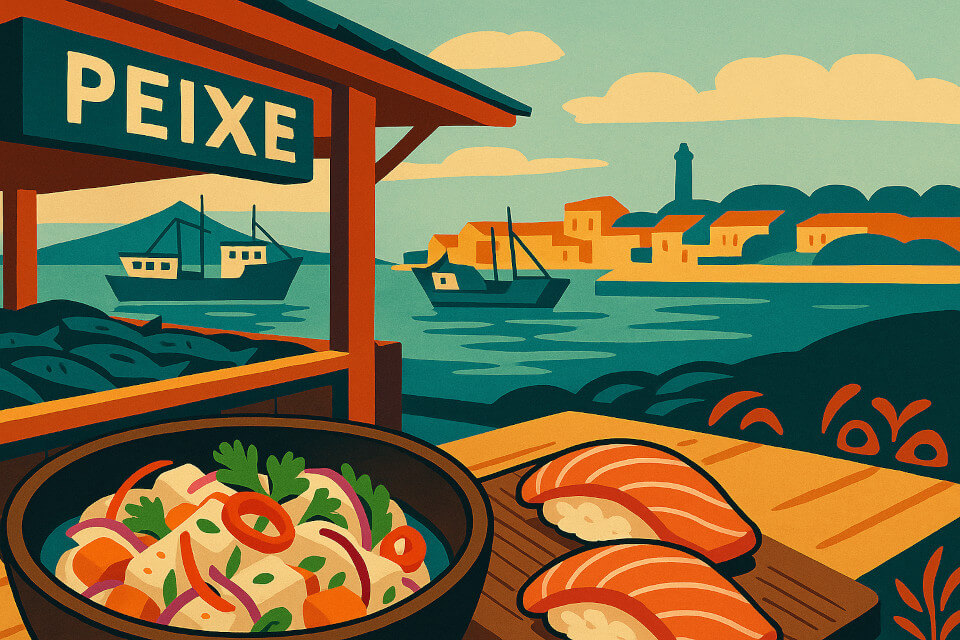
- Ceviche (Peruvian style: lime, ají, red onion, cilantro, leche de tigre)
- Sashimi / nigiri (Japanese style: clean cut, untouched, pure)
Both depend on absolute freshness
What we look for in fish for raw service
We’re extremely picky. For anything served raw (ceviche, sashimi, tiradito, crudo), we check:
- Eyes: clear and glassy, not cloudy.
- Gills: bright red, not brown.
- Smell: clean and salty, never “fishy.”
- Flesh: firm and elastic, not soft.
If it doesn’t pass, we don’t buy it. If it passes but the texture doesn’t feel right for the style (for example, too soft for nigiri, too fatty for ceviche), we also don’t buy it.
That’s why our menu changes — not for drama, just for standards.
Handling is everything
Once we choose the fish, we move fast:
- Transport on ice (fish sits on ice, not soaking in water).
- Break down in-house the same morning.
- Trim, portion, and chill immediately.
For sushi cuts, we control temperature and grain direction so the fish eats clean, smooth, and precise.
For ceviche, fish is cut to order and tossed in fresh leche de tigre — never left sitting in acid.
Nikkei mindset: Peru x Japan x Portugal
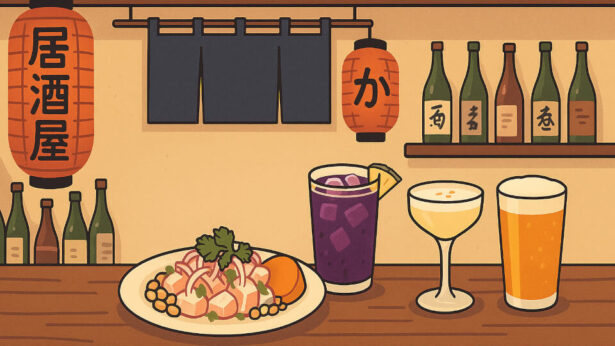
NANIKA is a Japanese/Peruvian izakaya, not a “fusion theme.” It’s a working style:
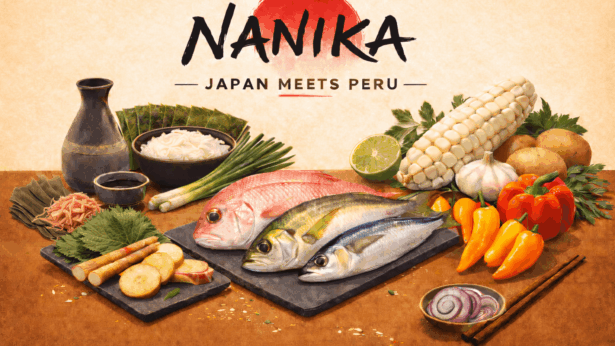
- Peruvian brightness: lime, ají, red onion, sweet corn, cilantro.
- Japanese technique: knife work, temperature control, discipline with raw product.
- Portuguese fish: caught here, that morning.
So you might get local Portuguese fish cut like sashimi and dressed like tiradito. Or classic ceviche next to nigiri. It all comes from the same sea, just expressed in different languages.
Sustainability (the real kind)
We don’t demand one specific species every day. That’s not how responsible buying works. We adapt to what’s coming in, avoid pressured species, and prioritize small-boat, line-caught fish when possible.
If the ocean says no, it’s no. The menu changes.
Why we tell you the fish by name
When we serve you ceviche, tiradito, sashimi, nigiri — we tell you exactly what fish you’re eating that day. Not “white fish,” not “catch of the day,” the actual species.
We do that because:
- It’s honest.
- You should know what you’re eating raw.
- Portuguese fish deserve credit.
The short version
Atlantic seafood.
Handled like sushi.
Served like ceviche.
Eaten in an izakaya.
That’s NANIKA.