Ceviche isn’t a trend. It’s not “raw fish with lime.” It’s one of Peru’s great cultural exports — a dish with memory, geography, and identity built into every spoonful.
What we call ceviche today is the result of centuries of knowledge along the Pacific coast of South America. When you taste it, you’re tasting history.
Below is the updated piece. This is the “final” voice we’ll use.
Older Than Any Restaurant: Where Ceviche Begins
The roots of ceviche go back long before modern Peru, long before restaurants, long before limes were even part of the recipe.
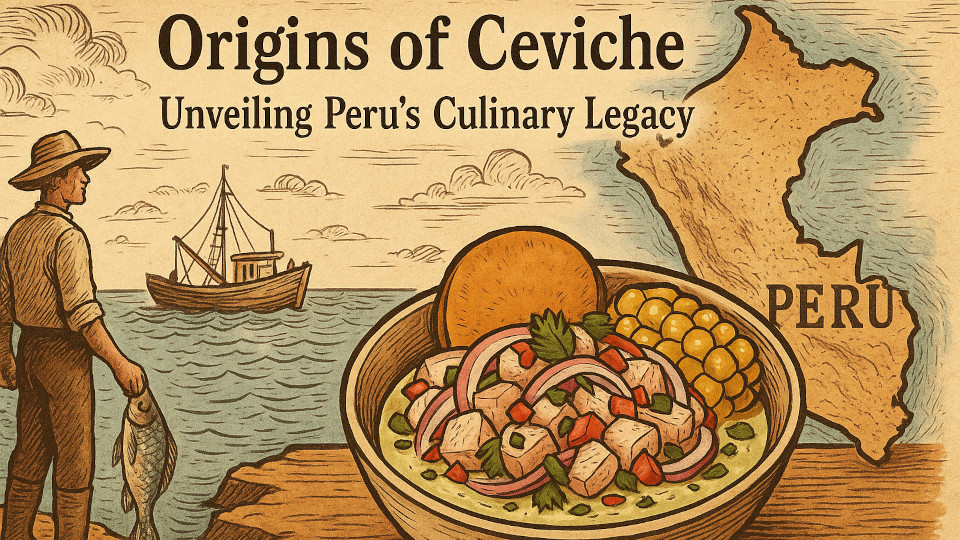
On the northern coast of what is now Peru, the Moche civilization — famous for their ceramics and their control of agriculture and fishing — were already marinating fresh fish in fermented juices and local fruits over 2,000 years ago. Later, the Inca refined coastal preparations using salt, ají (chili), and the natural acidity of local fruits to gently “cook” fish without fire.
Then came contact, trade, citrus, onions. Techniques mixed. Flavors sharpened. Ceviche slowly became the form we recognize now.
So when we serve ceviche, we’re not just serving a “dish from Peru.”
We’re serving something that survived empire, migration, and time — and somehow got even better.
Peru: The Land That Made Ceviche What It Is
Peru is absurdly rich in coastline. Cold, nutrient-heavy Pacific waters feed an ecosystem that produces clean, firm, flavorful fish. It’s no accident ceviche became a national obsession there.
From Lima to Piura to Trujillo, ceviche is not special-occasion food. It’s everyday pride. You’ll find it in mercados, in family kitchens, in tiny lunch counters that sell out before 14:00 and close the shutters because “fresh is finished.” It’s treated with respect because it represents who they are.
That attitude — discipline with product, no shortcuts — is exactly what pushed Peruvian ceviche onto the world stage.
What Makes Peruvian Ceviche Different
Peruvian ceviche is simple, but it’s not forgiving. There’s nowhere to hide.
The classic structure:
- pristine fish, cut cleanly
- fresh lime juice
- red onion, sliced thin
- ají (Peruvian chili), for heat and aroma
- cilantro for brightness
- salt to wake everything up
- sweet potato for softness
- choclo (big Peruvian corn) for crunch and sweetness
When it’s right, it hits you fast: cold, citrusy, salty, sharp, alive.
At NANIKA we try to honor that clarity. We don’t drown the fish in acid. We don’t hide it with sauce. The fish is the point.
The Technique Behind It
Making ceviche is not “cut fish and add lime.” It’s timing, texture, and control.
- Choosing the fish
You start with fish that is firm, clean-smelling, and naturally sweet. Eyes clear. Gills bright. Flesh with bounce. If it’s even slightly tired, you don’t use it. You cannot fix tired fish with lime. - Cutting the fish
Size matters. Too big and the citrus can’t penetrate in time. Too small and the fish breaks down, loses structure, turns mushy. So every cut has intention. - Leche de tigre
This isn’t just “lime juice.” It’s lime, salt, ají limo, onion, garlic, celery, ginger and the natural collagen from the fish itself. - Assembly
The fish is dressed to order, not left soaking for hours. We want the texture to still feel like fish, not ceviche purée.
This discipline — sharp knife work, respect for raw product, temperature control — is very close to Japanese thinking. Which is exactly where our kitchen lives.
Regional Variations: Peru Is Not One Flavor
There is no single “real ceviche.” Peru has many.
- Lima style
Clean, citrus-driven, focused. Lime-forward, red onion bite, ají heat, choclo and sweet potato alongside. - Arequipa style
Spicier, often with rocoto — a pepper that doesn’t whisper. - Northern coast
Different preferred fish, different fat levels, sometimes a touch more richness. - Amazon style
River fish, rainforest fruit, wild acidity. Totally different landscape, still called ceviche.
Ceviche evolves with region, climate, product, and culture. It’s not frozen in time.
Ceviche as Peru’s Quiet Ambassador
Peruvian ceviche traveled. First across Latin America, then the U.S., then Europe, then everywhere.
But even outside Peru, the message stays the same:
- Respect the fish.
- Respect the acid.
- Don’t fake freshness.
That’s Peru talking.
Bringing That Legacy to Porto
Now, Porto.
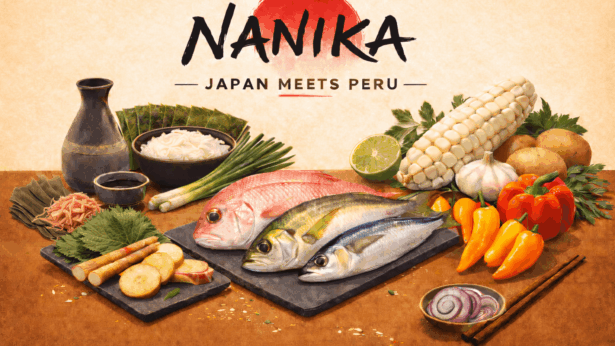
At NANIKA in Matosinhos, we serve ceviche next to sashimi, tiradito next to nigiri. That’s on purpose.
Peru gave the world ceviche.
Japan gave the world precision with raw fish.
Portugal gives us the Atlantic — and the fishing culture of Matosinhos.
We’re not trying to pretend we’re in Lima. That wouldn’t be honest here. What we’re doing is asking:
How do we protect the spirit of Peruvian ceviche using fish sourced in Matosinhos, and handle it with the same discipline we use for sushi?
Here’s what that means in practice:
- We source directly from local fishers and market sellers in Matosinhos, choosing fish based on quality and texture.
- We break that fish down ourselves.
- We portion and chill it properly.
- We cut it with the same respect we give to nigiri.
- We build our leche de tigre fresh, every service.
- We balance each plate so it tastes alive, not heavy.
And we tell you which fish you’re actually eating. Not “white fish,” not “catch of the day,” but the real species. Because ceviche deserves honesty. And so do you.
Final Thought
When you eat ceviche here, you’re not just getting “citrus and fish.”
You’re tasting:
- ancient coastal technique from Peru,
- Inca and pre-Inca knowledge of preservation without flame,
- the Peruvian obsession with brightness and texture,
- Japanese precision with knives and handling,
- and the Atlantic, through Matosinhos.
That whole story is in the bowl.
That’s why, for us, ceviche isn’t just a recipe.
It’s a responsibility.